
If you run or manage a warehouse, you will know how difficult it can be to keep a large space warm without wasting energy. High ceilings, roller shutter doors opening all day and rows of racking can make traditional heating feel ineffective. That is why many businesses looking for industrial heating solutions are turning to radiant tube heaters for warehouse environments.
This guide explains how radiant tube heaters work, why they are well-suited to warehouses and what to consider before choosing a system. It is based on what we see regularly across sites in Wolverhampton, Walsall and Dudley, where no two buildings are ever quite the same.
Introduction to Radiant Tube Heaters in Warehouses
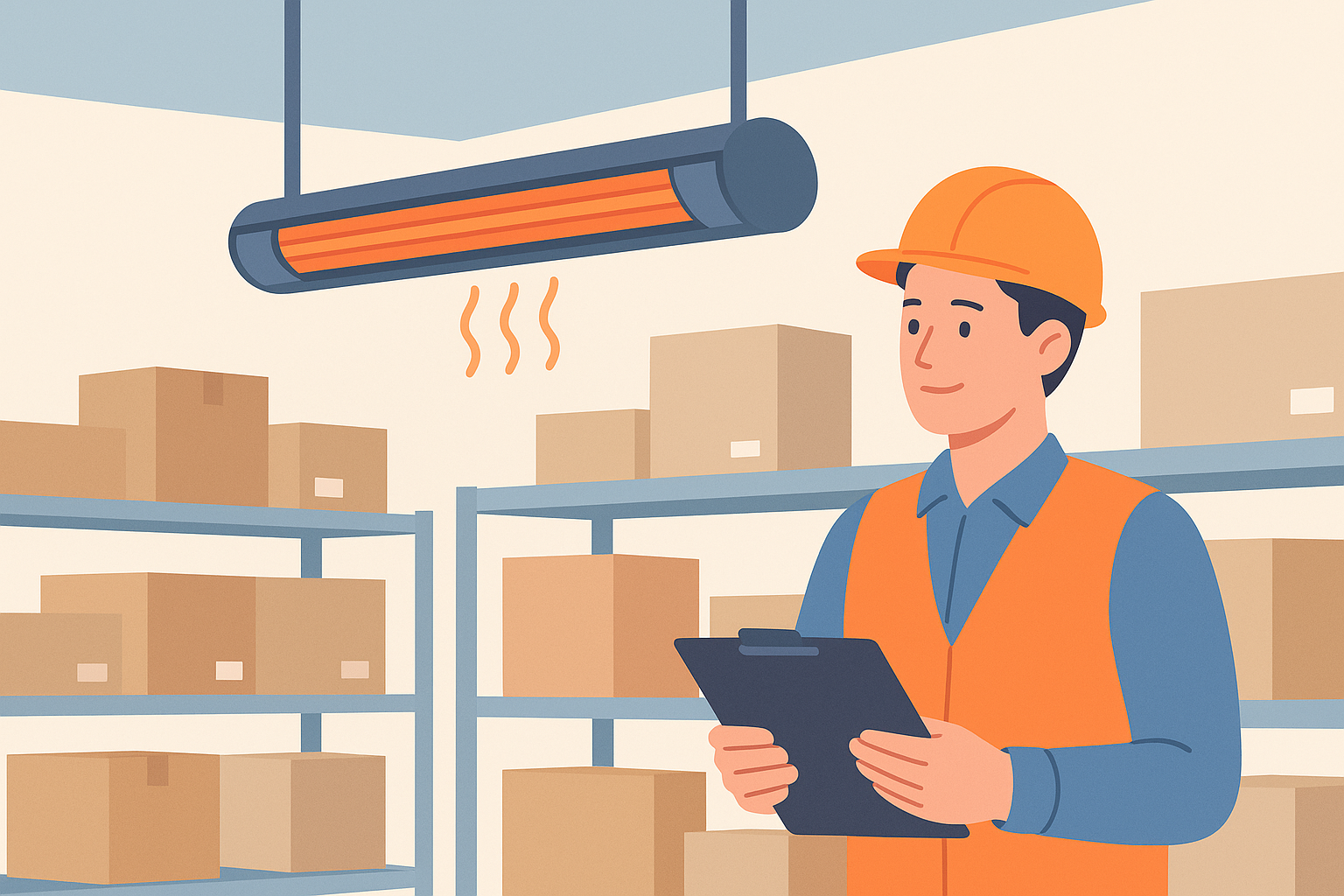
Radiant tube heaters used by warehouse operators are typically suspended from the roof and run along the ceiling. You will often spot them as long tubes with reflectors above them, usually gas-fired, positioned to cover open floor areas.
Unlike warm air systems that try to heat the air volume inside the building, radiant heaters work more like the sun. They heat objects and people directly. That means the floor, racking, stock and machinery absorb the warmth and then gently radiate it back into the space.
For warehouses with 6-, 8-, or even 12-metre-high ceilings, this approach makes a huge difference. Instead of pushing hot air up into the roof void, you focus heat where it is actually needed.
How Radiant Tube Heating Works and Key Benefits
How the system works
A typical radiant tube heater burns gas within a long steel tube. As the tube heats up, it emits infrared radiation. A polished reflector above the tube directs this heat downwards towards the occupied zone.
There is minimal reliance on air movement. So when someone opens a loading bay door on a cold January morning in Dudley, you do not immediately lose all your heat to the outside.
Key benefits for warehouse settings
From practical experience on sites across Wolverhampton, Walsall and Dudley, the main benefits tend to be:
- Even heat at floor level where staff are working
- Less heat loss through roof spaces
- Quieter operation compared to large blown air units
- Zoned heating for specific work areas
- Reduced dust circulation which is important for certain goods
Facilities managers often tell us the biggest difference staff notice is comfort. You are not waiting for the whole air volume to warm up. You feel the heat within minutes, particularly in picking and packing areas.
Choosing the Right System for Your Warehouse
No two warehouses are identical. Before selecting radiant tube heaters, warehouse owners should look at how the building is actually used day to day.
Building size and layout
The length, width and height of the space will determine how many tubes are required and how they are arranged. High-bay storage with narrow aisles may require a different layout than an open distribution centre.
We often carry out heat loss calculations on site, taking into account roof insulation, wall construction and how often doors are opened. It is not unusual in older units around Walsall for insulation levels to be inconsistent, which needs to be factored in.
Zoning and controls
If your warehouse includes offices, loading areas, and storage within a single large footprint, zoning is crucial. Radiant systems can be split so you only heat occupied zones during working hours.
Modern controls allow timed programmes and temperature set points for each area, helping to avoid overheating. This is particularly useful for operations running staggered shifts.
Fuel type and efficiency
Most radiant tube heaters are gas-fired, either natural gas or LPG. Efficiency ratings and burner quality vary, so it is worth comparing specifications carefully. A slightly higher upfront investment in a more efficient burner often pays back over time in energy savings.
Installation, Maintenance and Efficiency Tips
Installation is not simply a case of hanging tubes from the roof. Structural support, clearances from combustible materials and safe flue routes all need proper planning.
On some older industrial units in Wolverhampton, we have found roof steels that require additional bracketing before heaters can be fitted safely. These details are often missed without a proper survey.
Maintenance essentials
Like any commercial gas appliance, radiant heaters need regular servicing. Annual checks should include:
- Inspection of burners and ignition systems
- Cleaning reflectors to maintain heat output
- Checking flue integrity and ventilation
- Testing gas pressures and safety devices
Dust buildup is a common issue in warehouses, especially where cutting or packaging operations occur. Keeping reflectors clean helps maintain efficiency.
Costs, Energy Savings and Return on Investment
Running costs will depend on gas tariffs, insulation levels and operating hours. However, because radiant systems heat people and objects directly rather than large volumes of air, they are generally more efficient in tall spaces.
Many operations managers report measurable reductions in gas consumption compared to older warm-air systems, particularly where doors are opened frequently. Heat is not constantly being blown outside.
Return on investment is usually driven by:
- Lower energy use
- Improved staff comfort and productivity
- Reduced maintenance compared to complex ducted systems
While upfront costs vary depending on building size, a well-specified radiant system tends to offer steady long-term savings rather than short-term fixes.
Why Professional Installation Matters
Gas safety, ventilation requirements and correct positioning are critical with overhead heating systems. Poorly sited heaters can leave cold spots or overheat certain aisles, wasting energy and causing complaints from staff.
A professional survey will look at structural fixings, compliance with commercial gas regulations and integration with existing services. This is not an area to cut corners.
If you are considering radiant tube heaters for warehouse heating in the Black Country, it is worth speaking to a team that understands local building stock and commercial requirements. At the end of the day, a tailored specification will always outperform a one-size-fits-all approach. That is how we approach every project at 1st Time Fix.
Get in touch today to arrange a site survey or request a quote for your warehouse heating system.