
If you live out in the villages around Telford, there’s a good chance you’re not on mains gas. For many rural homeowners, oil is still the most practical way to heat the house and keep the hot water flowing. If your current boiler is getting on a bit, unreliable or simply costing too much to run, you might be looking into a system oil boiler replacement in Telford and wondering what’s actually involved.
We speak to homeowners every week who are unsure whether to repair or replace. Quite often it starts with, “It’s still working… but it sounds rough,” or “The service engineer mentioned parts are getting harder to find.” In this guide, I’ll walk you through what a system oil boiler is, who it suits, what you can expect in terms of costs and a few common questions we hear on site.
What Is a System Oil Boiler?
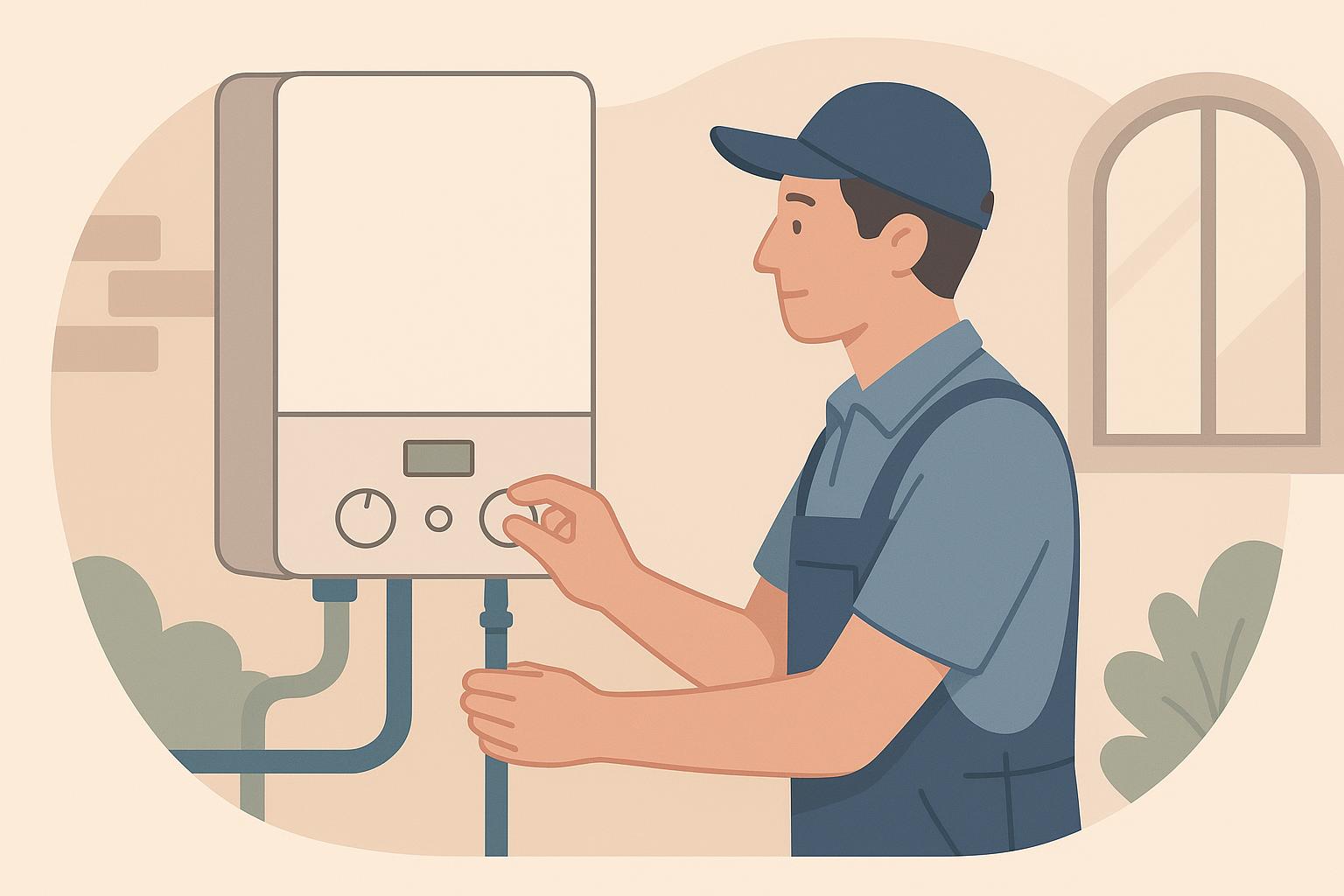
A system oil boiler is a boiler that runs on heating oil and works alongside a hot water cylinder. Unlike a regular boiler, most of the key components such as the pump and expansion vessel are built into the unit itself. That makes installation neater and often a bit more straightforward.
In simple terms, it heats your radiators directly and heats water which is stored in a cylinder ready for taps and showers. Because the hot water is stored, you can have multiple outlets running at the same time without the pressure dropping off too much, which is useful in larger rural homes.
These systems are common in farmhouses, barn conversions and detached properties around Telford where space is less of an issue and there’s usually a dedicated airing cupboard for the cylinder.
Who Do System Oil Boilers Suit?
A system oil boiler is not right for every home, but it works particularly well in certain situations.
Larger Properties with Higher Hot Water Demand
If you’ve got two bathrooms and teenagers who all decide to shower at once, a stored hot water system makes a lot of sense. You are not relying on the boiler to instantly heat everything on demand. Instead, you have a tank of hot water ready to go.
Homes Already Set Up with a Cylinder
Many rural properties in and around Telford were built with traditional heating systems. If you already have a cylinder and the pipework is in good condition, it can make sense to replace your system oil boiler like for like rather than converting to a combi.
Properties with Good Water Pressure
Most modern system setups use an unvented cylinder, which relies on decent incoming mains pressure. In rural areas, this is not always guaranteed. Before recommending a system oil boiler replacement Telford homeowners can rely on, we always check the incoming pressure and flow rate. There’s nothing worse than installing a new system only to find the shower underperforms because the supply is weak.
When Should You Replace a System Oil Boiler?
Oil boilers are generally robust. We still see some that are 20 years old or more. That said, age catches up with everything.
You might want to consider replacing if:
- Your boiler is over 15 years old and efficiency is poor
- Breakdowns are becoming more frequent
- Parts are discontinued or expensive
- Your oil consumption has noticeably increased
- The casing or heat exchanger shows signs of corrosion
A modern condensing oil boiler is significantly more efficient than older models. That can mean lower fuel use over time, which matters when you are ordering oil in bulk and watching the price fluctuate.
What Does a System Oil Boiler Replacement Involve?
Every property is slightly different, especially in rural areas where previous alterations are common. We have lifted floorboards to find pipes running in directions no one expected.
A typical replace system oil boiler job involves:
- Removing the old boiler safely and disposing of it correctly
- Inspecting and potentially upgrading the oil supply line
- Flushing or cleaning the heating system
- Fitting the new boiler and connecting to existing pipework
- Commissioning, setting controls and testing thoroughly
If the hot water cylinder is old or poorly insulated, we may recommend upgrading that at the same time. It is more cost effective to address it during the replacement rather than calling someone back a year later.
How Much Does a System Oil Boiler Replacement Cost?
Costs vary depending on the size of the property, the brand of boiler chosen and how much pipework adjustment is needed. As a rough guide, most rural homeowners investing in a system oil boiler replacement in Telford are looking at several thousand pounds including the boiler, labour and necessary upgrades.
If you need a new cylinder, oil line alterations or significant system cleaning, that will add to the total. The only honest way to price it properly is with a home visit. We can then see access, check your oil tank location and look at the current setup rather than guessing.
Common Questions We Hear
Will a New Boiler Save Me Money on Oil?
In many cases, yes. Modern condensing oil boilers extract far more heat from the same amount of fuel compared to older non condensing units. The savings depend on your usage and how inefficient the old boiler is, but improvements are usually noticeable.
How Long Does Installation Take?
A straightforward swap can often be completed within two to three days. If additional work is needed such as moving the boiler, replacing the cylinder or upgrading controls, it may take longer.
Do I Need to Upgrade My Oil Tank?
Not always. However, if your tank is very old, single skinned or does not meet current regulations in terms of distance from boundaries, it is wise to address it. We often flag this during surveys, especially in more remote spots where tanks have been in place for decades.
Final Thoughts for Rural Homeowners
Choosing to replace system oil boiler equipment is not a small decision. It is an investment in your home’s comfort, reliability and running costs. For many properties around Telford, oil remains the best practical option, and a modern system setup can deliver strong performance for years to come.
If you are based in Telford, Bridgnorth, Shifnal, Shenstone or Wheaton Aston and you are weighing up your options, it is worth having a proper conversation rather than guessing. At 1st Time Fix, we take the time to look at your current system, talk through how your household actually uses hot water and heating and give straightforward advice. 1st Time Fix works with rural homeowners across the area every week, so we understand the quirks that come with oil heated properties.