
As experienced heating engineers at 1st Time Fix, one of the most frequent questions we’re asked when offering professional oil boiler servicing advice is whether homeowners should switch off their heating system during an oil delivery. Understanding proper safety precautions while maintaining your system can prevent costly breakdowns and ensure efficient heating. Whether you’re enrolled in one of our oil care plans or simply want to protect your equipment, it’s important to know what to do when your oil tank is being refilled.
In this blog, we’ll explain why it’s best practice to turn your oil boiler off during refuelling, explore the safety science behind it, and offer expert servicing tips to keep your system running efficiently all year round. For more on maintenance, you can also explore our boiler servicing and repairs or check the solutions available on our oil tank services page.
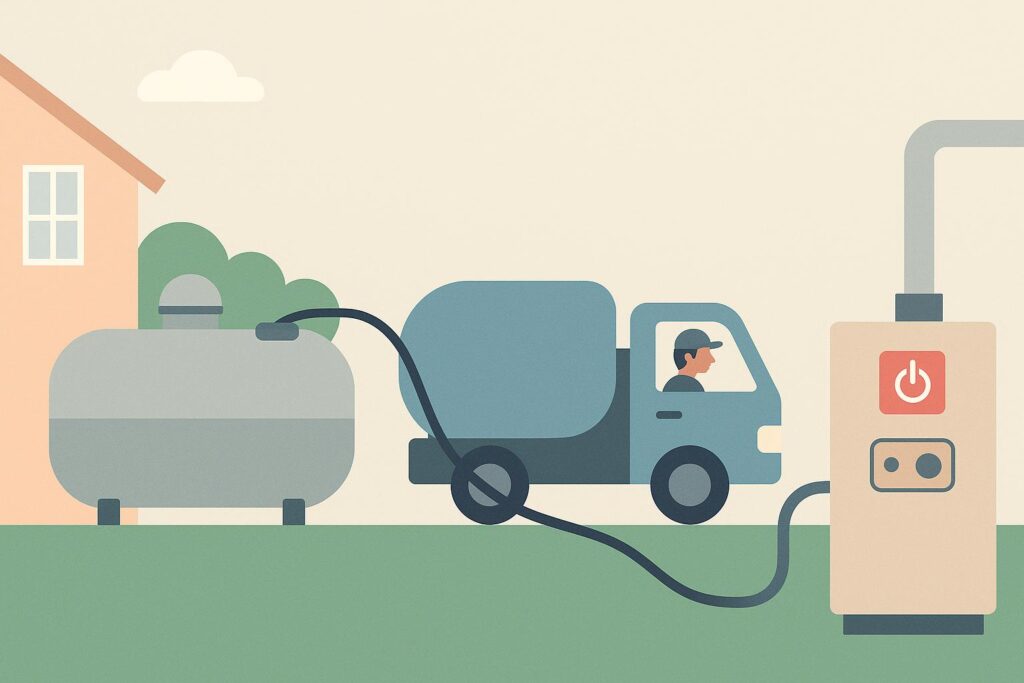
Why It’s Recommended to Turn Your Oil Boiler Off During a Tank Fill
Turning your oil boiler off while your tank is being filled is a simple but essential safety measure. During a delivery, oil is pumped into your storage tank under pressure, and this can cause temporary turbulence, air pockets, or the release of small amounts of vapour. If your boiler is running, it may try to draw fuel just as these disturbances occur, which can cause air to enter the fuel line or burnt residue to enter the system. This can cause your boiler to lock out, leading to inefficiency and potential component damage.
This practice is a critical part of oil boiler safety when filling oil tank, ensuring that no combustion occurs while vapour or sediment is disturbed. Allowing the tank to settle for about 15–20 minutes after filling before restarting your boiler ensures clean fuel flow and stable combustion once the system resumes operation.
Potential Risks of Leaving the Boiler On During Refuelling
Although the risk may seem small, ignoring this precaution can have serious effects on your heating system. Some common risks include:
- Air trapped in the oil feed line, causing the boiler to lock out.
- Disturbed sediment in the tank being drawn into the burner, clogging filters and nozzles.
- Ignition risks from fuel vapour around ignition components if ventilation is poor.
- Irregular flame patterns from fluctuating fuel supply pressure.
Professional heating engineers always recommend powering the boiler down completely until the fill has finished. This cautious approach is part of good maintenance practice and can prevent unnecessary callouts later.
Additional Oil Boiler Maintenance and Servicing Tips
Beyond safety during refuelling, regular servicing is key to the longevity of your oil boiler. During a professional service, your engineer will clean the combustion chamber, replace filters, check efficiency, and ensure all safety controls are operating correctly.
- Have a full boiler service annually before the heating season begins.
- Check the condition of your oil lines for leaks or corrosion.
- Keep your oil tank free from water contamination by inspecting caps and seals.
- Bleed any air from the line after a tank fill if the boiler fails to fire.
- Consider investing in a service plan for predictable maintenance costs.
Taking these steps, combined with professional attention from a qualified engineer, will help maintain high performance and reduce unexpected repair bills. Learn more about the systems we install and service on our oil boilers page. For more guidance, readers might find our related blog helpful on oil system maintenance from our resource section.
How Professional Engineers Uphold Oil Boiler Safety
Professional heating engineers follow established safety standards to ensure both system and environmental safety. This includes verifying that the delivery area is clear, ensuring tank vents are unobstructed, and that all firing equipment is turned off before any delivery begins. Once the tank is filled, an engineer may check for leaks, confirm line pressure stability, and reset the oil boiler only after the fuel line has settled.
These protocols ensure not only safe operation but also help improve efficiency and reduce emissions. If you’re ever unsure about how to manage the heating system before or after a delivery, contact a certified oil engineer for specific advice suited to your setup.
Final Thoughts and Next Steps
Should you turn off your oil boiler while your oil tank is being filled? Absolutely. It’s a simple action that protects your home, your heating system, and your fuel supply line. Allow the tank to settle for 15 to 20 minutes before switching the boiler back on, and if you notice any irregularities, don’t hesitate to seek professional support.
For expert oil boiler servicing advice and full system safety checks, get in touch with our friendly, qualified engineers at 1st Time Fix. We’re here to keep your oil boiler running safely, efficiently, and reliably all year round.