
If your oil-fired heating system has locked out or isn’t firing properly, it may need bleeding to remove trapped air from the fuel line. This process can restore steady fuel flow and improve efficiency. In this guide, our expert engineers at 1st Time Fix explain everything you need to know about how to bleed an oil boiler safely.
Before you begin, it’s important to understand that bleeding an oil burner involves handling fuel systems. Only carry out this process if you’re confident and have basic plumbing or heating knowledge. Otherwise, you should always use a qualified engineer from our professional oil boiler service team.
Why You Might Need to Bleed an Oil Burner
Air can enter the oil line for a few reasons — often when the tank runs low or after new components have been fitted. This trapped air disrupts the flow of fuel reaching the burner. Signs that your system needs bleeding include:
- The boiler locks out frequently or refuses to start.
- A gurgling or spluttering sound when the burner tries to fire.
- Sudden loss of heat even though there is fuel in the tank.
- Unusual flames or inconsistent burning at the boiler’s ignition.
If you’re unsure whether air is the cause, a visit from a certified heating engineer can diagnose issues safely. Our experts at 1st Time Fix can check your fuel lines, filters, and oil tank for problems during a regular oil tank service.
How to Bleed an Oil Boiler Burner: Step-by-Step
Step 1: Turn Off the Power
Before doing anything, isolate electrical power to your oil boiler. This ensures no accidental ignition occurs while you’re working.
Step 2: Locate the Bleed Screw
The bleed screw is typically found on or near the oil pump at the burner assembly. You’ll need a small spanner or Allen key to loosen it later.
Step 3: Prepare a Container and Rags
Place a small container under the bleed valve to catch expelled oil. Keep cloths or paper towels handy for any spills. Safety goggles and gloves are recommended.
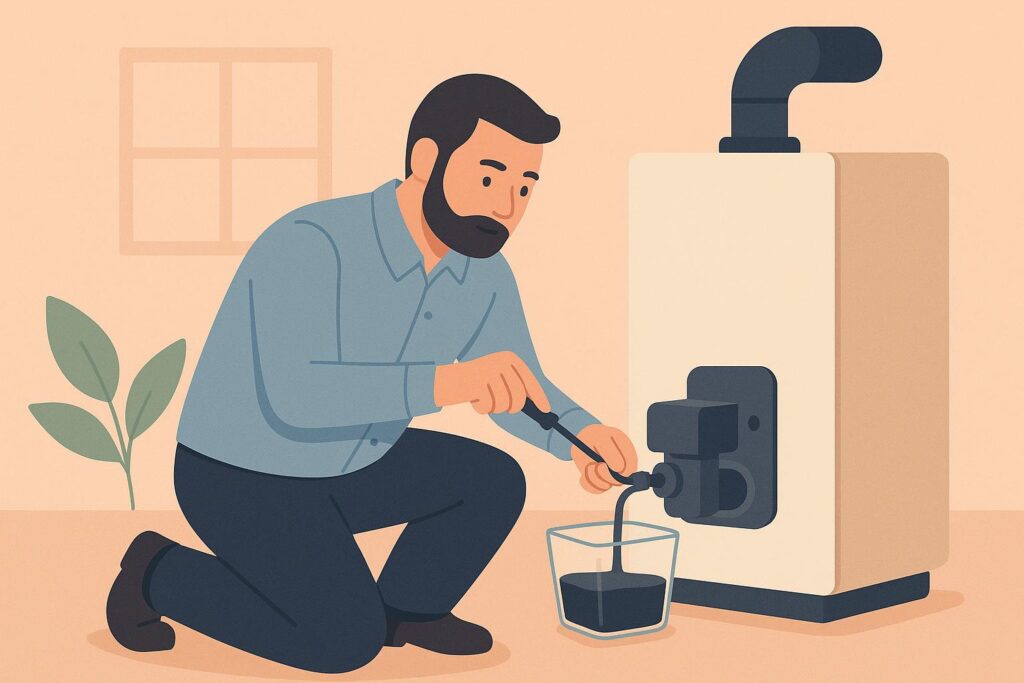
Step 4: Open the Bleed Valve and Start the Boiler
Have a helper press the boiler reset button to start the burner motor. Slowly open the bleed screw about half a turn to allow air and oil to flow into the container. You’ll likely see spurts or bubbles at first—this is normal.
Step 5: Close the Valve When Oil Runs Clear
Once a steady stream of oil without air bubbles appears, tighten the bleed screw securely. Stop the burner, clean up any spilled fuel, and restart your boiler. It should now ignite smoothly.
Step 6: Check for Leaks and Test the Boiler
Inspect all fittings for leaks. If the burner fails to operate correctly after bleeding, repeat the process once. If issues persist, contact an engineer for further diagnosis.
Top Tips for Safe Bleeding and Ongoing Maintenance
- Always ensure there’s enough oil in your tank before restarting the system.
- Never over-tighten the bleed screw—it could damage the pump.
- Keep your fuel filters clean to prevent air entering the line.
- Schedule annual professional servicing to maintain fuel efficiency and safety.
For homeowners wondering about how to bleed oil boiler burner systems efficiently, prevention is always better than cure. Our team also provides comprehensive central heating services to keep your system in top condition year-round. You can also explore our blog for more expert advice on boiler care and maintenance, including tips on safe oil storage and seasonal efficiency checks.
When to Call a Professional Heating Engineer
If bleeding your oil boiler doesn’t resolve the issue or you’re uncomfortable handling fuel, it’s best to call a specialist. Trained engineers can inspect the burner nozzle, oil line, and filters while ensuring everything complies with safety regulations. At 1st Time Fix, our engineers are OFTEC-registered and experienced in diagnosing all types of oil boiler faults quickly and safely.
Need Help with a Bleed Oil Boiler Service?
Bleeding an oil boiler is a simple job for some homeowners, but when in doubt, always seek professional help. Our friendly team at 1st Time Fix provides reliable servicing, fault finding, and emergency breakdown support across the region. Don’t let air in your oil line cause unnecessary stress—book a service with us today.